by HJ KIM · 2014 · Cited by 18 — speaking, privatization aims to improve management efficiencies, reduce govern ment's burden of providing financial support and budget subsidies to the public.
Service Areas Japanology Plus Around 900 roadside service areas provide amenities along Japan's expressway toll roads, and many are now popular leisure destinations. We examine their evolution and links with local communities.
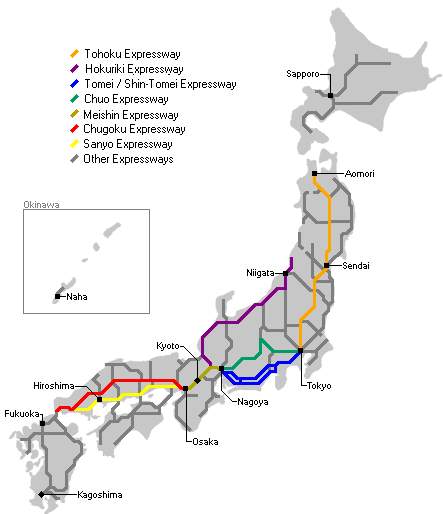
Japan's four main island and Okinawa are covered by an expressway (高速道路, kōsokudōro) network of over 10,000 kilometers. Further routes are still under construction. Below is a map showing the major operational expressways.
Foreign visitors should encounter few problems using Japanese expressways, since all important signs are written in both Japanese and English. The speed limit for passenger cars is usually 80 or 100 km/h, except on one-lane expressways where the speed limit is 70 km/h.
Below is some vocabulary useful for using Japanese expressways:
Interchange (IC) In Japan, an interchange refers to an expressway entrance and exit, e.g. Tokyo IC.
Junction (JCT) Like in English, a junction refers to a place where multiple expressways meet.
Parking Area (PA) A parking area comes with toilets and one or more vending machines. Sometimes it also features a restaurant.
Service Area (SA) Generally larger than parking areas, service areas feature toilets, shops, restaurants and a gasoline stand.
Yes, roadside service areas, known as "Service Areas" (SA) and "Parking Areas" (PA), are common features along Japan's expressway toll roads, providing a range of amenities for travelers. These areas are designed to offer convenient stops for food, restrooms, shopping, and other services, and some have even evolved into popular leisure destinations.
Here's a more detailed look:
Service Areas (SA):
These are larger facilities that typically offer a wider array of amenities, including restaurants, shops, gas stations, and sometimes even unique features like Ferris wheels, onsen (hot springs), or amusement park-style attractions.
Parking Areas (PA):
These are typically smaller and offer more basic services like restrooms, parking, and vending machines.
Beyond Basic Needs:
Many SAs and PAs go beyond just providing necessities and offer unique experiences, like:
Themed areas:Some SAs are designed with historical or cultural themes, like the Hanyu SA on the Tohoku Expressway, which is designed to look like an Edo-period village, according to Stripes Japan.
Scenic views:Umihotaru PA, located on an artificial island in the Tokyo Bay, offers stunning panoramic views of the Tokyo skyline and the surrounding area, according to Stripes Japan.
Recreation:Some SAs have playgrounds, hiking trails, or even onsen, making them destinations in themselves.



沒有留言:
張貼留言